


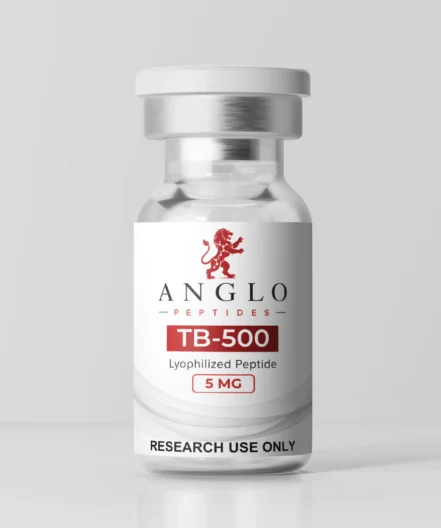
Healing and recovery peptides form a research category rather than one defined drug class. Canadian laboratories compare BPC-157, thymosin beta-4 products, GHK-Cu and KPV in separate cell, tissue and animal models. Blends combine selected components for mixture studies. Anglo Peptides supplies the products shown below for laboratory research only.
healing peptides Canada: Definition and Research Overview
The phrase healing peptides Canada groups several unrelated research compounds by study topic. It does not describe one mechanism, sequence or evidence level. BPC-157 contains 15 amino acids. Products sold as TB-500 can represent thymosin beta-4 or a related fragment. GHK-Cu is a copper-binding tripeptide, while KPV is the Lys-Pro-Val fragment of alpha-MSH.
Researchers use these compounds in assays that measure cell migration, extracellular-matrix markers, inflammatory signalling or changes in animal tissue models. Each experiment needs a defined test article. Record the sequence, molecular form, nominal content, lot and preparation conditions before comparing results.
Browse Anglo Peptides Canada or the full Buy Peptides Canada catalogue. Product-specific information is available for BPC-157 5mg–10mg product page and batch COA and the TB-500 + BPC-157 5mg/5mg blend. Researchers comparing multi-component formats can also review the GLOW blend and KLOW blend.
What Current Studies Say About Healing Recovery Peptides
Published studies support research hypotheses for individual compounds. A rat tendon study reported that BPC-157 increased tendon-explant outgrowth, fibroblast migration and cell survival under oxidative stress. A thymosin beta-4 study in diabetic and aged mice reported changes in wound contracture, collagen deposition and keratinocyte migration. These results come from preclinical models and do not establish a clinical effect for retail products.
GHK-Cu cell research has reported changes in collagen synthesis and matrix metalloproteinase expression in fibroblast cultures. KPV studies have examined PepT1 transport, inflammatory signalling and mouse colitis models. The compounds act in different systems, so researchers should avoid treating “recovery peptide” as a shared mechanism.
Researchers have less direct evidence for commercial mixtures. Studies of one component do not prove that a GLOW, KLOW or BPC-157 + TB-500 preparation produces additive or synergistic results. A mixture study needs standalone-component and vehicle controls.
Primary research: BPC-157 tendon fibroblasts · thymosin beta-4 wound models · GHK-Cu and collagen synthesis · KPV intestinal research
healing Recovery peptides: Key Comparisons and Use Cases
| Research product | Model context | Comparison point |
|---|---|---|
| BPC-157 5mg–10mg | Tendon fibroblast, gastrointestinal and pharmacokinetic models | Standalone 5 mg and 10 mg options support single-component designs |
| TB-500 | Thymosin beta-4, actin, migration and wound-model research | Confirm the exact form and sequence because suppliers use the name inconsistently |
| BPC-157 + TB-500 blend | Two-component comparison studies | Fixed nominal 5 mg + 5 mg ratio; use standalone controls |
| GHK-Cu | Fibroblast and extracellular-matrix assays | Copper-bound tripeptide with a distinct analytical profile |
| KPV | Inflammatory-signalling and intestinal models | Three-amino-acid alpha-MSH fragment |
| GLOW and KLOW blends | Multi-component screening | Require component-level identity, ratio data and broader controls |
A healing blend peptide can reduce preparation steps, but the fixed ratio limits experimental flexibility. Standalone products give researchers more control over concentration and single-agent comparisons. Select the format that matches the study question rather than grouping the products by a general recovery label.



healing blend peptide: Evidence Quality, Limitations and Safety Context
Evidence quality varies across the category. Many publications use cells or animals, and direct controlled human evidence remains limited for the marketed products. Evidence for one peptide does not transfer to another peptide or a premixed blend. Researchers should separate exploratory results from validated clinical conclusions.
HPLC can measure chromatographic purity, while mass spectrometry supports molecular identity. A 99% HPLC result does not prove nominal vial fill, sterility, endotoxin level, residual solvents, biological activity, efficacy or safety. Blend reports should resolve and identify each component. Review the matching Certificate of Analysis before laboratory work.
Storage conditions also differ by compound and preparation. Follow the product label and batch documentation. Record temperature, solvent, pH, concentration, container and freeze-thaw history. A general category statement cannot replace stability data for the selected test article. The peptide calculator can support concentration planning within a documented laboratory protocol.
Read the TB-500 research before comparing formats
The TB-500 vs thymosin beta-4 guide explains the molecule used in each study and the limits of applying those findings to a product listing. The BPC-157 vs TB-500 comparison separates individual-compound evidence from claims about premixed blends. Use the source summaries alongside the product and lot documentation.
Frequently Asked Questions
What does the current evidence say about Healing Recovery Peptides?
Most evidence comes from cell, tissue and animal models. BPC-157 studies have examined tendon fibroblast behaviour and gastrointestinal models. Thymosin beta-4 studies have examined cell migration and wound models. GHK-Cu and KPV research addresses different pathways. These findings do not establish that every product or blend improves healing in people.
How is Healing Recovery Peptides evaluated or used in laboratory research?
Researchers select a defined peptide, record its lot and batch report, prepare it under a controlled protocol and compare results with vehicle and single-component controls. Common laboratory endpoints include cell migration, matrix markers, inflammatory signalling and tissue-model measurements. The study design should match the compound and test system.
What purity, storage and safety limitations should researchers consider?
HPLC purity and mass spectrometry address chromatographic purity and molecular identity. They do not prove vial fill, sterility, endotoxin status, biological activity, efficacy or safety. Researchers should match the vial to a batch report, follow product-specific storage instructions and validate stability after preparation.
What is the difference between BPC-157 and TB-500?
BPC-157 is a synthetic 15-amino-acid peptide studied in tendon fibroblast, gastrointestinal and pharmacokinetic models. The TB-500 name can refer to different thymosin beta-4 forms or fragments, so researchers should verify the sequence and molecular mass on the batch report. Thymosin beta-4 studies have examined actin biology, cell migration and wound models.
What purity are your recovery peptides?
The storefront lists at least 99% HPLC purity and third-party testing for products in this category. Purity remains a batch result. Researchers should review the matching chromatogram, mass result, test date and lot identifier before use.
Do you ship across Canada?
The storefront offers domestic Canadian shipping. Researchers should confirm live stock, shipping options and delivery estimates during checkout because availability and transit times can change.
What is a healing blend peptide?
A healing blend peptide product combines two or more listed research compounds in one vial. The blend fixes a nominal component ratio and reduces control over individual concentrations. Researchers need component-level identity data and single-component controls before attributing a result to the mixture.
How should researchers compare a blend with standalone peptides?
Use the same assay conditions and include vehicle, each standalone component and the blend. Record component ratios, concentration, solvent and storage conditions. This design helps separate a mixture effect from the contribution of one component.
Is a batch-specific COA available for healing and recovery peptides?
Anglo Peptides states that batch reports are available for its research products. Match the report lot to the vial and confirm that a blend report identifies each component. Request the correct report before laboratory use when the posted document does not match.
How should healing and recovery peptides be stored in the laboratory?
Follow each product label and batch documentation. Many unopened lyophilized products list frozen storage with protection from light and moisture, while prepared solutions may require refrigeration. Solvent, pH, concentration, container and temperature can change stability, so the laboratory should validate its preparation.
Research Use Only. Products and information on this page support laboratory research. They are not intended for human or veterinary use, diagnosis or treatment.
