Send this resource to your team or professional network.
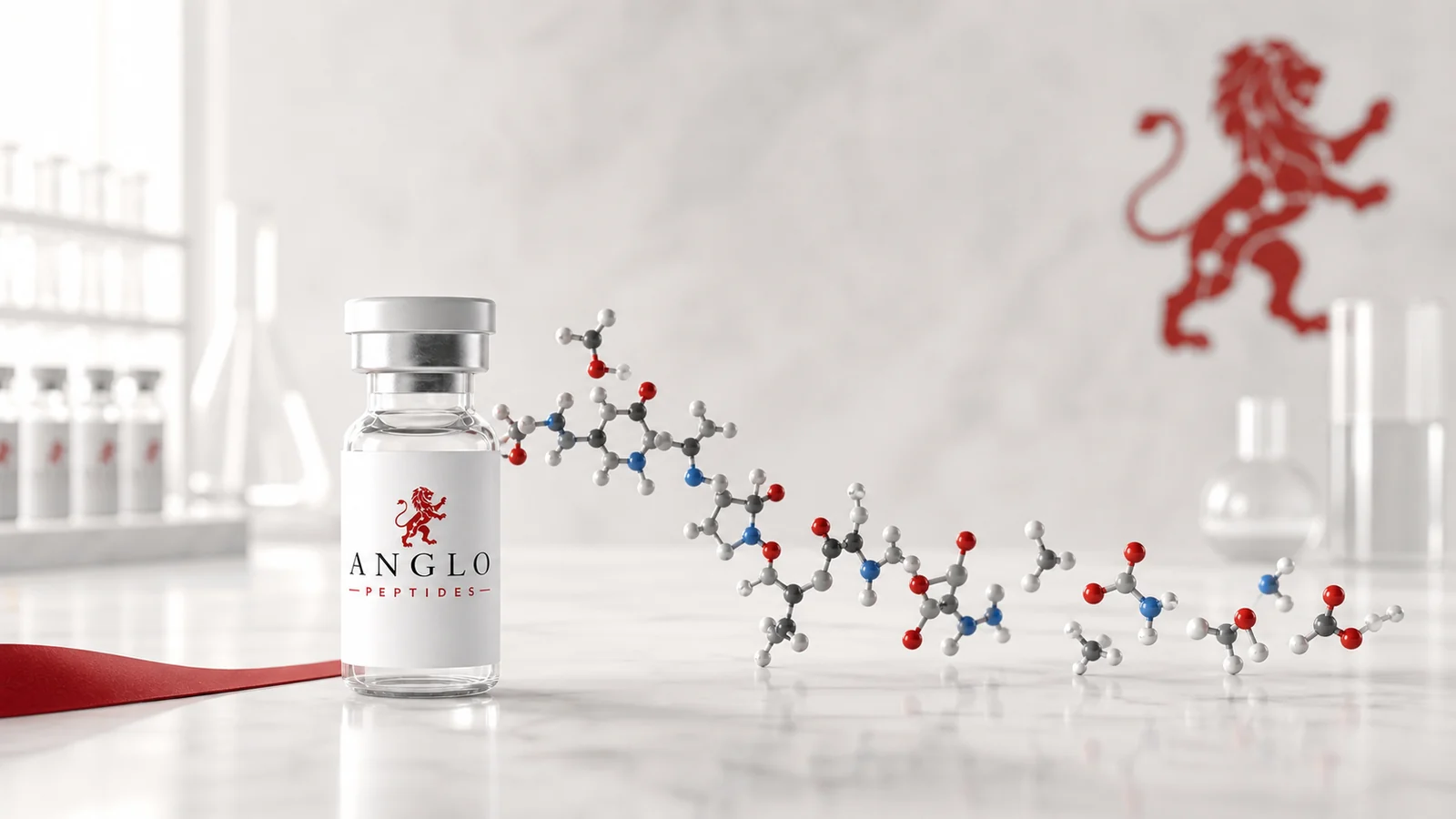
What are peptides? Peptides are short chains of amino acids linked by peptide bonds — the fundamental molecular units studied in modern biochemical research. Understanding what are peptides is essential for anyone entering peptide science. For reference, see Nelson et al., Biochemistry (PubMed) and NCBI Molecular Biology of the Cell: Protein Structure.
What Are Peptides: Definition and Structure
Research use only. This beginner overview is for licensed researchers and students. It is not medical advice, and research peptides are not for human use.
New to peptide research? This beginner’s guide breaks down what peptides are in plain language, how they’re built, what they do in the body, the main types you’ll encounter in research, and how they’re handled in the lab.
On this page
Peptides Explained Simply
Think of amino acids as letters and peptides as short words built from them. A peptide is a small chain of amino acids joined by peptide bonds; string enough together and you get a protein. Because each sequence has a specific shape and charge, peptides act like precise keys that fit particular biological locks, receptors and enzymes, which is what makes them valuable research tools. For a deeper treatment, see our complete understanding peptides guide.
Common Types of Research Peptides
Beginners most often encounter four groups: metabolic peptides such as semaglutide and tirzepatide; growth-factor peptides like CJC-1295 and ipamorelin; tissue-repair peptides such as BPC-157 and TB-500; and other signalling compounds like GHK-Cu.
How Peptides Are Used in the Lab
Research peptides arrive as a freeze-dried powder and are dissolved (reconstituted) in bacteriostatic water before study. Getting this right is the foundation of reliable data, start with our reconstitution guide and the peptide calculator.
Getting Started with Research Peptides
Quality matters from day one: reproducible results require high-purity, COA-tested material. Anglo Peptides supplies third-party-tested peptides (at least 99% purity) with Canadian shipping.
Why Purity & Sourcing Matter
Reproducible research depends on high-purity, COA-tested material. Anglo Peptides supplies third-party-tested peptides (at least 99% purity) with Canadian shipping. Learn more in why buy from Anglo Peptides.
Frequently Asked Questions
What is a peptide in simple terms?
A peptide is a short chain of amino acids, like a short word built from letters, that acts as a targeted signalling molecule in the body.
What is the difference between peptides and proteins?
They are made of the same building blocks; chains under roughly 50 amino acids are usually called peptides, and longer ones proteins.
Which peptides should a beginner researcher learn first?
Common starting points include the metabolic (GLP-1), growth-factor and tissue-repair classes, each covered in its own detailed guide.
Are research peptides for human use?
No. They are strictly for licensed laboratory research and are not for human consumption.
References
This beginner guide reflects established peptide biochemistry. For detailed, compound-specific information, see our individual research guides and the PubMed-indexed literature. Research use only.
Research planning resources
Build a documented workflow with the peptide procedures guide. Use the peptide solubility guide to assess sequence properties, pH and assay compatibility.
Related Peptide Research Articles
Related reading: BPC-157 vs TB-500: Which Peptide for Which Research Protocol, Ipamorelin Half-Life: Timing, Dosing Intervals and Research Protocols, and GHK-Cu Peptide: Copper Tripeptide Research and Mechanisms.